Guardian™ Purifier

Skip to product information
1 of 11

MSR

Guardian™ Purifier

Regular price $399.95
Regular price Sale price $399.95
Sale Out of Stock

No Hassle,
30-Day Returns

Free Shipping
over $50

Warranty
Protection

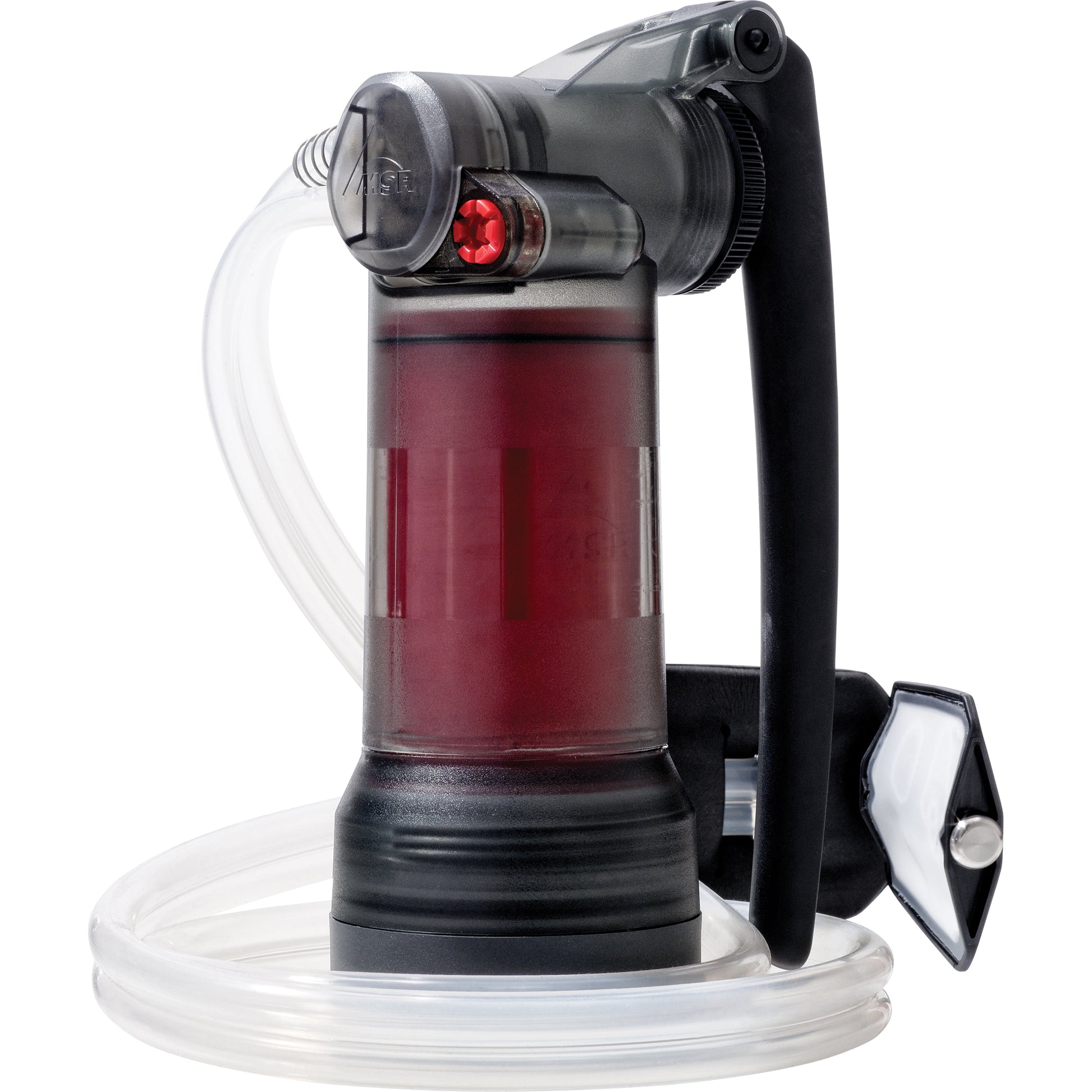
The world’s most advanced backcountry purifier.
  • Ultimate Protection: Meets NSF protocol P248, testing standard used by U.S. military, for removal of viruses, bacteria, protozoa, and sediment from “worst-case” water conditions.
  • Fast & Easy: Pumps a rapid 2.5 liters per minute, offering added viral protection without the need for chemicals, bulbs, batteries, or waiting.
  • Self-Cleaning: Pump self-cleans on every stroke, providing consistently fast flow rates with zero hassle—no backflushing or filter-scrubbing ever required.
  • Long-Lasting: Leading-edge hollow fiber cartridge treats up to 10,000+ liters.
  • Extremely Durable: Engineered to withstand heavy use, freezing, drops*, and harsh environments.

    *Withstands MSR water lab drop testing: 6 ft. to concrete.
Made in Market
Product Award
Product Award
Product Award

Awards

View full details
WARNING:
Nothing is safer or easier to use for purifying the most demanding backcountry water sources than the Guardian purifier. Originally designed for military squads, it brings this highly advanced technology to global travelers, backcountry users, and those stocking emergency kits. Fast and easy to use, this pump purifier offers the added viral protection you need when traveling in developing nations and popular wilderness areas. Its advanced hollow fiber filter offers the most reliable way to purify even filthy water conditions. Add its long-lasting performance and revolutionary self-cleaning ease, and this may be the only treatment device you’ll ever need.
Weight:
1 lb 1 oz (490 g)
Dimensions:
8.25 x 4.4 in (21 x 11 cm)
Effective Against Bacteria:
Yes
Effective Against Chemicals/Toxins:
No
Effective Against Particulate:
Yes
Effective Against Protozoa:
Yes
Effective Against Viruses:
Yes
Filter Media:
Advanced Hollow Fiber
Filter Pore Size (Microns):
0.02
Flow (L/Min):
2.5 liters per min
Cartridge Life:
10,000+ liters
Field Cleanable:
Self-Cleaning
Field Maintainable:
Yes
Water Bottle Adapter:
Yes
Cartridge Replacement Indicator:
Yes
Material(s):
Hollow Fiber
Country Of Origin:
Made in Ireland
SKU:
14003

Collapsible content

Why do I need a filter or purifier?

All surface waters have the potential to be contaminated with at least one of the three types of disease-causing microorganisms: protozoa, bacteria, and viruses. While it is true that you can drink directly from many water sources, it is critical to understand that each time you do, there is a chance of ingesting one of these bugs. Infection symptoms can range from an upset stomach to debilitating illness and, depending on where you are, can mean anything from a simple inconvenience to a life-threatening situation. Since microorganisms are impossible to see, taking the proper precautions with any water can help to ensure a safe trip.

How is a filter different from a purifier?

The main difference lies in the level of protection they provide. Generally speaking, a water filter is designed to remove waterborne protozoa and bacteria, but not viruses. A water purifier is designed to combat all three classes of microbes, including viruses.

Because North American backcountries are regarded as low-risk for viruses, filters typically offer a sufficient water treatment method. In places heavily trafficked by humans or where sanitation systems are poor, the risk for viruses increases. In these areas, such as in developing countries, a purifier is recommended.

Additionally, filters physically remove matter and microbes from the water. In contrast, a "purifier" can employ a variety of methods to do so, from physically removing the contaminants to disinfecting the water of them, through UV or chemical treatments.

Why the two treatment device options? The reason is, viruses are just too small for filters to catch. Far smaller than protozoa or bacteria, viruses slip through the technologies used in backpacking filters. Traditionally, UV light, chemical treatments or boiling were required to deactivate viruses by scrambling their DNA or killing them. Today, new advancements in physical purifiers provide a convenient option to physically remove viruses quickly and easily.

The flow rates of physical purifiers are generally slower than that of filters, because the internal media that removes contaminants has to be small enough to capture tiny viruses. This slows the rate at which water passes through the media, decreasing overall flow rate.

What is the scoop on protozoan parasites?

Protozoa are the largest of the waterborne bugs measuring in the one-micron range. Giardia and cryptosporidia are the most infamous of the group. The infective cysts and oocysts of protozoa are extremely robust and can survive for months in a water source. They thrive in domestic and wild animals as well as humans. Cryptosporidia oocysts are known for their resistance to chemical treatment. Most disinfectants are ineffective, and the few that are require long dwell times to do the job.

What is the scoop on bacteria?

Bacteria are an order of magnitude smaller than protozoa measuring in the 0.5 - 2 micron range. The most well-known bacteria are E. coli; others include Leptospira (which causes Leptospirosis), Campylobacter, Salmonella, and Shigella. Bacteria aren't as hearty, surviving in water only for weeks instead of months. However, unlike protozoa and viruses, which require a host to multiply, some bacteria can grow in water and so can be found in higher numbers than protozoa and viruses. Bacteria, like protozoa, are often carried by both animals and humans. Because of this, many water sources are contaminated with bacteria. Beware especially of sources near agricultural operations.

What is the scoop on viruses?

Viruses are the smallest type of pathogen, ranging between 0.02 - 0.3 microns. Waterborne viruses are very resilient and can survive for months. It is important to note that viruses are generally species-specific. In other words, those that infect animals do not infect humans and vice versa. Because of this, and the well-maintained sewage systems in developed countries, not as many water sources are contaminated with human viruses. However, in heavily traveled backcountry areas, viruses can be present where human waste is not disposed of properly. In developing countries with little or no sewage control, viruses are often widespread and purification in such countries should be standard procedure for all travelers.

What happens if I drink water that contains viruses, bacteria and protozoa?

First, it will usually take more than one organism to make you sick—around 10 for protozoa and viruses and 10 to 1,000,000 for bacteria depending on the species. The onset of symptoms can start anywhere from 10 hours to several weeks from the point of infection depending on the type and amount ingested, and constitution of the individual. Symptoms can range from nothing to diarrhea, abdominal cramps and pain, nausea, vomiting, muscle cramps, fever, fatigue, headache, chills, loss of appetite, and, in the case of hepatitis, dark urine and jaundice. Symptoms usually dissipate in a couple of days or weeks, again depending on the three elements above. Healthy adults will generally knock the illness without needing medical attention and without lasting effects. However, infants, young children, elderly, pregnant, and immune-compromised individuals are at higher risk of needing medical attention or having complications from an illness. Your location—a remote basecamp in Pakistan or a day hike close to home— will play a key role in the severity of your illness, should you become infected. For more information on diseases caused by specific pathogens, please visit www.cdc.gov.

What do MSR filters remove from the water?

A filter actually removes matter and microbes from the water while a "purifier" can employ a variety of methods to disinfect the water (such as UV or MIOX® or combination system like the MSR Sweetwater® purifier). A purifier must meet the EPA Guide Standard for Testing Microbiological Purifiers, which requires inactivation of all three classes of microbes: protozoa, bacteria and viruses. Filters in general claim to remove only protozoa and bacteria, making it adequate for most travel in developed countries. Some filters alone can qualify as a purifier, but since they are filtering to such a small pore size, they tend to clog quickly. Essentially the classification as a "purifier" means that the device must be capable of inactivating viruses, as well as protozoa and bacteria.

What does inactivate mean?

Inactivate means to damage a microorganism sufficiently to render it harmless.

How do I decide whether a filter or a purifier is best for me?

To decide whether you need a filter or a purifier, two important factors must be evaluated: water sources and susceptibility.


When evaluating water sources it is important to keep the following in mind: In general, protozoa and bacteria infect both animals and humans and are transmitted to water sources by animal and human waste. In contrast, waterborne viruses are species-specific and therefore transmitted to water sources by human waste alone. As a rule of thumb, remote areas with few people require (at least) filtration while popular areas with many human visitors require purification. If traveling in developing countries with poor sanitation, purification will be your safest choice.


Susceptibility is another good way to determine needs. If the treated water is to be consumed by infants or young children, elderly, or pregnant or immunocompromised individuals, then it is essential to use a purifier for the highest level of protection. Purification is also best for people who tend to get sick. If you rarely get sick and do not fit into any categories mentioned above, then filtration may be adequate depending on the water source.

What pore size or micron rating are the MSR filters?

Micron ratings aren't always the best way to gauge effectiveness. Test procedures for micron ratings vary so greatly that comparing them is misleading. In addition, micron ratings for filters do not tell you how the product will perform with actual bugs. There is an EPA Guide Standard for Testing Microbiological Purifiers, which describes how to test products to determine if they are removing or inactivating the proper number of pathogens in different types of water throughout the life of the device. When looking for a microfilter or purifier ask if the product has been tested according to the EPA Guide Standard and passed. For a microfilter, meeting the EPA Guide Standard means removing 99.9% of protozoa and removing 99.9999% of bacteria in all required water types. To be classified as a purifier, the device must meet the EPA Guide Standard for the removal of protozoa and bacteria as well as virus which must be inactivated to 99.99% in all required water types. All of the MSR filters and purifiers have passed the levels of inactivation required by the EPA Guide Standard with flying colors.

Will my filter or purifier protect me from bioterrorism?

As a result of the September 11 attack and the following concerns about bioterrorism, we have received a number of inquiries regarding our microfilters' ability to protect against such threats. MSR microfilters will protect you from harmful microorganisms that are 0.2 microns or larger. The anthrax bacteria, for example, measures about 8 microns and would be removed by all MSR filters. Additionally, if a water reservoir were contaminated with a biological agent, it is unlikely that enough organisms could be added or would survive the treatment process of the water plant to provide an infectious dose at the tap. Our water supply is more likely to be compromised or cut off completely as a result of a natural disaster, such as an earthquake or hurricane, or by a general state of disorder following any kind of attack or natural disaster. By including a good water treatment device (and knowing how to use it) in your emergency kit, you will be prepared for most situations.

Do MSR filters and purifiers remove chemical contaminants from the water?

MSR filters and purifiers provide microbiologically safe drinking water. Several MSR filters feature a carbon component that reduces some chemical contaminates such as herbicides, pesticides, and volatile organic compounds (VOCs). However, MSR filters or purifiers will not protect you from high chemical concentrations or heavy metal contamination. Do your best to avoid water sources such as mining tailing ponds or those near agricultural operations.

How will tannins (tea-colored water) affect my filter or purifier?

MSR filters will remove some tannins from the water you are filtering. Like other contaminants, they will clog your filter over time, requiring you to clean the cartridge. Tannins will react with disinfectants and can make treated water taste unpleasant. If possible, look for a clear water source to prolong the life of your filter and improve the taste of purified water.

What is the warranty on MSR filters and purifiers?

MSR filters and purifiers come with a limited warranty. Contact our Warranty and Repairs Department., if there are any problems with your filter or purifier and they will be happy to help with solutions.

Understanding Prop 65

What is California Proposition 65?

Passed into law by California’s voters in 1986, Prop 65 is intended to help California residents make informed decisions about the products they buy.

The law states that companies selling products in California must display a warning when the product contains one or more of the approximately 800 chemicals known to the state of California to cause cancer and/or reproductive harm.

Why has MSR placed a Proposition 65 label on some of its products?

By placing the Prop 65 warning on a product, MSR acknowledges that it contains one or more of the chemicals on the Prop 65 list, however the listed chemical may be well within the “no significant risk” range. MSR has not evaluated every product but out of caution, we include the warning.

Are consumers who use an MSR product with a Proposition 65 label at risk?

The label simply indicates that the product contains the chemical and because of that, there is a potential for exposure to it.

The California government states: “The fact that a product bears a Proposition 65 warning does not mean by itself that the product is unsafe.” The government explains, “You could think of Proposition 65 more as a ‘right to know’ law than a pure product safety law.”

For example, some MSR stoves contain brass. Exposure to brass is not itself harmful. However lead is a component of brass and should the brass be disrupted, a user could potentially come in contact with the lead. While the lead levels fall below the “no significant risk” range, MSR is still required to acknowledge its presence.

To learn more about California’s Prop 65, please visit: https://oehha.ca.gov/proposition-65/general-info/proposition-65-plain-language

What types of chemicals are on the Proposition 65 list?

The Prop 65 list contains a wide range of naturally occurring and synthetic chemicals that are known to California to cause cancer or birth defects or other reproductive harm. They may be additives or ingredients in pesticides, common household products, food, drugs, dyes or solvents. They may be used in manufacturing and construction, or be the byproducts of chemical processes. Proposition 65 requires that the Governor of California maintain and publish a list of these harmful chemicals, and update it annually.

According to the state of California:

A chemical is listed if it has been classified as a reproductive toxicant or carcinogen by an "authoritative" organization on the subject. The U.S. Environmental Protection Agency, U.S. Food and Drug Administration, National Institute for Occupational Safety and Health, the National Toxicology Program, and the International Agency for Research on Cancer are considered authoritative for carcinogens. For reproductive toxicants, appropriate authorities include the U.S. Environmental Protection Agency, U.S. Food and Drug Administration, National Institute for Occupational Safety and Health, and International Agency for Research on Cancer. Chemicals will also be listed if they are required to be labeled or identified as a carcinogen or as a reproductive toxicant by an agency of the state or federal government.

If I own a TrailShot filter, can I purchase the dirty water bag and adapter to create my own Trail Base gravity system?

Not at this time. Your TrailShot filter is not compatible with the gravity components of the Trail Base Water Filter Kit. Therefore, we don’t sell those gravity components separately. While the TrailShot filter and the small filter in the Trail Base Kit look similar, they are indeed different—particularly their spouts and prefilters. Therefore, the TrailShot will not integrate with the Trail Base’s gravity components. We are considering making design adjustments that will allow for integration in the future.

What is a purge valve and hose, and why does the Guardian Gravity Purifier have one?

The Guardian Gravity Purifier features a purge hose and valve to self-clean the system, no backflushing required. Open the purge valve to flush dirt and air until the water color matches the source water and is free of bubbles. This helps increase the flow rate, because air trapped in the purifier cartridge can reduce water flow. Hold the cartridge horizontally or gently tap the cartridge as water flows to help release the air.

Please note, the purge valve releases highly concentrated dirty water from the purifier. Do not allow any drops from the purge hose to splash into your clean water.

Why is my gravity filter or purifier flow rate slow?

Gravity filters and purifiers rely on the physics of gravity to pull water down through the filter/purifier media and into your clean water receptacle. The higher the dirty reservoir bag is above the clean water output, the better the flow rate will be.

To increase the flow rate, first try hanging the reservoir bag as high as you can above the clean water output. Second, make sure to purge air out of the system following the directions included with the filter or purifier (also found in the Videos section).

If your filter or purifier has seen a significant amount of use, it may be time for a replacement filter/purifier piece.

Free Shipping on Orders over $50

We offer complimentary FedEx Ground shipping for orders over $50. Learn More

Orders Shipped in 1-2 Days

We do our best to get all orders out within one business day, Monday through Friday. Learn More

No Hassle Returns

We accept returns within 30 days of purchase. All returned items must be in new condition. Please be sure no dirt, grass or pet hair is on the item you are returning. Learn More

We Believe in What We Build

At MSR, we take pride in engineering the highest-quality outdoor gear available, and we stand behind everything we make. MSR gear is built to be exceptionally durable and easily repaired. And we back it up with the best service in the industry, all to keep your gear performing for you—and out of landfills. Visit our MSR warranty page for more info.

Portrait of our repair shop crew

Overall rating: 3.9515152 / 5 from 165 reviews.

AI Generated Review Summary

The Guardian™ Purifier is highly praised for its advanced water filtration system, impressive flow rate, and user-friendly design. Customers appreciate its reliability and durability, making it a top choice for backcountry trips. However, opinions on quality are mixed.

Summary topics

  • Water Filtration: 37%
  • Trip Reliability: 7%
  • Overall System Performance: 5%
  • Flow Rate: 5%
  • Filter Ease of Use: 38%

Review topics: ["fit","weight","bag","problem","performance","quality","design","value","pressure","equipment","speed","price","volume","conditions","confidence","works","arms","filter","water","pump","purifier","guardian","bottle","msr","trips","system","buy","taste","flow","unit"].

Review highlights

  • "Lessons learned: most of the time, filtration just occurred over one or two days, this last trip was longer."Rob
  • "It pumps super fast, and the water tastes great."David L.
  • "I will say the water thus far tastes great and the act of pumping is fast and not strenuous."Brian M.

Reviews

Love the product but the first one I got leaked and there's no repair policy.

"I love the product. This is my second one. The first one was leaking and I could not find a way to get it repaired so I bought another one. Unfortunately there's no good way to get these filters repaired when they're leaking from the pump handle."

Todd R. (4/5)

Hefty Price Tag for Faulty System

"I have had the same issue as countless other poeple it seems, for this price and the way that the product is marketed and described I expected to get a piece of robust gear that I can consistently rely upon for mine and others health and safety. Since I bought this filter there has been a leak between the Housing and the outlet at the bottom at the seal, I have tried tightening and untightening to every degree and there is still and flow of untreated water through this division. This puts mine and my families health at risk when using this $400 piece of equipment and now I have no faith in the product to protect me from the things it is advertised to. Very disappointed in the quality and functionality of this product I had very high hopes for, I would not recommend unless you want to be $400 down for something that will end up protecting you from nothing."

Michael D. (1/5)

Great Customer Service on a fabulous product

"About a year ago, I upgraded my backcountry water treatment to the Guardian Purifier. I take small crews (fewer than 12) on extended backpacking treks. Many crews include youth, such as Scouts, whom I train to handle water preparation. After one of those trips, I noticed the purifier had been disassembled unnecessarily, and the pin and sleeve for the handle fulcrum were missing. The kids had rigged a stick as a temporary fix. I sanitized the system and contacted customer support, since these two parts don't appear on the site to order separately. After the first automated response, customer service verified what I needed and where to ship it, and they sent it to me right away. No charge. Just - "Here 'ya go. Let us know if you need anything else. " Wow! Thanks! I love the system in the backcountry because it is efficient, effective, and pretty much maintenance-free. Combine that with great customer service, and what more could I ask for? I'm all in."

Jack R. (5/5)

Best pump purifier out here,but not an idiot proof

"I've had this for 6 years. Using it in Canadian Rockies and New Zealand. Never got sick once. I am careful with water but I am also careful with how I use this filter. In 6 years of use I only did sanitization before and after off season storage. Nothing else. Nothing ever broke. I estimate that about 1500L has been pumped. This is high end piece of equipment and you need to apply your brain. All the issues people describing here are easily solvable. Just spend some time and watch 7 min video on Guardian parts page ( or MSRs YT channel) and you will see how easy it is to avoid all issues. You just spent over 500 bucks - spend another 10 min to learn how to use it. The main advantage of this filter is simple - whenever I am at the camp pumping away with other people around me, I am ALWAYS first one out. The speed of this equipment is phenomenal. 10L dromedary bag has been great addition to this filter. Safe, realizable, fast and confidence inspiring."

Val (5/5)

Leakage because of design

"I’ve experienced the same fatal flaw as other users with water leaking from the filter insert into the water bottle. This system is completely compromised by its design and the hefty price tag makes this issue criminal. I had to switch back to tablets mid trip because this thing failed consistently. It’s a simple problem, you have to thread in the water bottle and this over tightens the filter, and then you unscrew the bottle and it destroys the seal of the filter. The filter moves every time you change bottles or drom bags. This is the manufacturer’s fault, not user error. This product should be be discontinued until this flaw is corrected."

Alex P. (1/5)

Guardian Purifier and gravity filter worked great

"Just back from 16 days on the muddy waters of the Green and Colorado Rivers. The Guardian Purifier and Guardian gravity filter provided all the water for 16 of us with ease. I was impressed by the simplicity and how quickly they produced excellent tasting clean water. Two thumbs up."

Darsie C. (5/5)

They sent me a broken

"They sent me a broken Purifier. Out of the box the knurled ring by the lever was broken. What kind of quality control is that? I had heard stories in the other reviews how there had been problems and MSR took weeks or months to try and resolve the issue, but I was assured things had improved. I guess they have not. What a disappointment. Brand new, direct from the factory and they did not even inspect it before they shipped it to me."

Val L. (1/5)

pump handle broke day 1

"The handle broke on day 1. Luckly, we had other water filters on this trip. I later purchased the Guardian Gravity water filter, which is idiot proof…A+"

edward (2/5)

Works even in the silty

"Works even in the silty desert!"

Erika W. (5/5)

Phenomenal filter

"Phenomenal piece of equipment for hiking. For large parties of people, it can provide clean water in suboptimal environments and in less than ideal conditions. It is heavy for short trips, but the flow rate is incredible when compared to other purifiers. For ultralight adventures, flow through filters are more ideal and better suited for weight conscious endeavors. Was used on Mt. Baker for party of 7 and it performed excellent."

Robert F. (5/5)

Q&A