DragonFly® Stove

Skip to product information
1 of 6

MSR

DragonFly® Stove

Precision flame control with large-pot stability
  • Unrivaled Flame Control: We pioneered the dual-valve design of the Dragonfly stove, enabling it to deliver precision, simmer-to-boil control.
  • Extra Wide Pot Supports: Wide pot supports hold up to 10" maximum diameter pots or fry pans for group cooking
  • Multi-Fuel: Burns white gas, kerosene, unleaded auto fuel, diesel, and jet fuel.
  • Compact: Folds to 1/3 of its working size and fits in a two-liter MSR pot for easy storage.
  • Efficient: Suspended burner cup enables the stove to burn hot and strong while reducing heat lost to the ground
  • Field Maintainable: Shaker Jet technology and smart engineering allow complete cleaning and maintenance in the field.
  • Emergency-Ready: Field maintainability and reliable durability make liquid fuel stoves an excellent choice for an emergency preparedness kit.
  • Includes: Fuel pump, windscreen, heat reflector, small-parts kit, instructions, and stuff sack. (Fuel bottle not included.)
Made in Market
View full details
The Dragonfly stove takes precision-simmering performance and puts it in a chassis that’s built to handle a variety of fuels and the frequent use dished-out by global vagabonds. Tough and stable, it also excels in institutional and guide service settings, easily handling pots up to 10” in diameter. Its dual-valve design delivers the flame control you need for simmering sauces, and goes from zero to searing at the twist of a knob for melting snow and brewing-up fast.
SKU:
14097
Width (Standard):
4 in
Weight (Standard):
14.1 oz
Length (Standard):
4 in
Height (Standard):
6 in
Minimum Weight (Standard):
14.1 oz
Minimum Weight (Metric):
0.40 kg
Packaged Weight (Standard):
1 lb 1 oz
Packaged Weight (Metric):
0.51 kg
Burn time (white gas) per 600ml / 20 oz. of fuel:
126 minutes
Burn time (kerosene) per 600ml / 20 oz. of fuel:
153 minutes
Burn time (diesel) per 600ml / 20 oz. of fuel:
136 minutes
Boil time (white gas), 1 liter:
3.5 minutes
Boil time (kerosene), 1 liter:
3.9 minutes
Boil time (diesel), 1 liter:
3.5 minutes
Water boiled (white gas) per 100 ml of fuel:
5.3 liters
Water boiled (white gas) per 1 oz. of fuel:
1.6 liters
Water boiled (kerosene) per 100 ml of fuel:
5.7 liters
Water boiled (kerosene) per 1 oz. of fuel:
1.7 liters
Water boiled (diesel) per 100 ml of fuel:
5.7 liters
Water boiled (diesel) per 1 oz. of fuel:
1.7 liters
Country of Origin:
Made in USA of US and Imported Materials

Collapsible content

Is the Switch stove compatible with all cookware?

No. With the pot supports flipped out in ‘compatibility mode’, the Switch stove can support any flat-bottom pot that does not exceed 8 in./20.3 cm in diameter, 5 in./12.7 cm in height, and 8 lb./3.6 kg in weight. In ‘system mode’ (with the pot supports folded in), the Switch stove is only compatible with the Switch Pot. The Switch stove is also not compatible with any cookware with a heat exchanger in either mode.

Which WindBurner® Pots can I use with which stoves?

WindBurner pots must be used only with WindBurner stoves. This is because the pot and stove are specifically engineered to create an integrated system.

There are currently two WindBurner stove designs. The original threads directly onto the top of the canister. It is available only in the smallest WindBurner system, the Personal 1.0 L System.

In 2017, we introduced the remote-canister design, in which the stove is remotely connected to the canister by a fuel line. This new design supports larger pots and is available in the WindBurner Duo System,Group System and Combo System.

Compatibility

Every WindBurner pot is compatible with the new remote-canister stove. It provides the necessary stability needed for the larger pots. Therefore, the remote-canister stove is compatible with:

If you own the 1.0 L Personal system or a first-gen 1.8 L system and your stove mounts on top of the canister, you may use these pots:

Do not use the larger 2.5 L Group Sauce Pot or 4.5 L Stock Pot on this top-mounted stove; the larger pots are less stable on this stove.

Do I need to upgrade my WindBurner® to the new remote-canister stove design?

It depends on your cooking preferences.

The new remote-canister stove burner is a more versatile stove design because it provides the ability to cook with the new larger WindBurner pots. If you plan to cook for groups or make more elaborate meals in the backcountry, the new remote-canister stove is an excellent choice. It comes in the new WindBurner Duo System, the Group System and the Combo System.

If you simply want to boil water fast, and your party size is typically only 1-3 people, the 1.0 L Personal System or the first-generation 1.8 L System (which feature the stove that mounts directly on the canister) remain great options.

Are camping fuel canisters refillable?

No, backpacking fuel canisters, such as MSR’s IsoPro canisters, are not refillable. When buying fuel in a foreign country, ensure that the canisters you’re purchasing have not been used and refilled, as this practice can create a dangerous situation. MSR’s Warranty & Repair Shop in Seattle offers free canister recycling for those who are able to drop their canisters off at the shop.

Can I use any pot on a WindBurner® stove?

Because of the WindBurner stove’s unique radiant burner design, only WindBurner pots may be used on WindBurner stoves. It’s important to remember that each WindBurner stove system is just that—a system, which requires its burner and its specially engineered pot. All WindBurner pots feature a heat exchanger on the bottom. The WindBurner’s radiant burner is designed specifically to work with this heat exchanger. Together, the heat exchanger and radiant burner create a windproof, highly efficient system for backcountry cooking. It’s for this reason that generic pots are not compatible with the WindBurner stove.

Can I run the canister inverted with my WindBurner® Stove?

No, the WindBurner is not designed to be used this way. To achieve similar performance to an inverted canister in cold weather and with low fuel, the WindBurner uses a built-in pressure regulator. This regulator design allows the stove to deliver a faster and more consistent cooking experience than using the canister inverted, down to 32 F/0 C canister temp.

Do not invert the canister on your WindBurner stove. Doing so can lead to extremely dangerous flare-ups or liquid fuel build up. The fuel line connection was intentionally designed without a swivel connection to prevent such use. If you wish to use the WindBurner in temperatures below freezing, place the canister in a bowl of water. As long as the canister stays above freezing, it will operate at full output, providing fast boil times and excellent fuel efficiency.

Are there videos showing stove use and maintenance?

Yes. We currently have these videos available demonstrating use and maintenance for our liquid-fuel stoves.

Can I send in my stove to be serviced?

Yes, our Product Service Department can perform services for a modest price.

How do I fly/travel with my stove?

Each airline has different rules regarding the transportation of camping stoves. Please ask your airline about their regulations. 

Please note: Carrying flammable fuel on passenger aircraft in carry-on or checked luggage is forbidden. Before transporting fuel bottles on passenger aircraft, safely empty all fuel, wash inside with soapy water, rinse thoroughly, air dry, and stow bottle uncapped. 

Check for the latest regulations on the TSA website.

Where do I get fuels in foreign countries and what other types of fuel can I use?

Camping fuel (white gas) is sold in a variety of places worldwide. If you can't find fuel in an outdoor store, try a gas station or hardware store. For translations and general availability of fuels around the world see the chart at the bottom of this blog post.

Liquid Fuel Stoves — If you have a multi-fuel stove, like the XGK, DragonFly or WhisperLite Internationale stoves, try kerosene. Just remember to use the "k" jet included with your stove (Marked K, GK, or DK depending on the stove).

Canister Fuel Stoves — PocketRocket, WindPro, and Reactor® stoves will only accept threaded, self-sealing canisters. If you have a SuperFly stove, it will work on both threaded and non-threaded self-sealing canisters, like Campingaz branded canisters.


What pumps are compatible with what stoves?

MSR standard stove pumps (Grey and Red or Grey and Black) are compatible with all MSR liquid fuel stoves, except the DragonFly&trade stove. DragonFly-specific pumps (Red and Red or Teal and Red) will only work with DragonFly stoves.

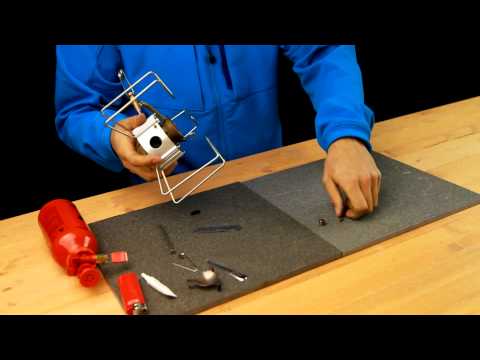
How do I clean the DragonFly™ stove valve?

Only clean the inside of the Cool Fuel valve if you have less than 1.5 total revolutions of the Flame Adjuster when fully assembled.

  1. Remove Flame Adjuster, Jet and Shaker Jet needle. For best results allow fuel line to completely dry out on the inside.
  2. Assemble the wire handle from the Flame Adjuster onto the DragonFly cleaning tool.
  3. Insert DragonFly cleaning tool into flame adjuster tube and rotate clockwise while applying firm, but not excessive, force. After 20 turns remove the DragonFly cleaning tool. Shake out debris by tapping fuel line on clean hard surface and allowing deposits to fall out of fuel line through Flame Adjuster port. Reassemble Flame Adjuster and count the number of full revolutions, If less than 1.5 repeat cleaning. After cleaning is done install Flame Adjuster and flush out the fuel line.

How do I flush the DragonFly™ fuel line?

Flushing is required any time valve cleaning has been performed.

  1. Connect stove to Fuel Bottle with DragonFly Pump as if assembling for operation. (Do not include windscreen or Heat Reflector).
  2. Remove Flame Spreader, Jet and Shaker Jet Needle.
  3. Turn On/ Off Valve and Flame Adjuster ON and allow fuel to run through fuel line for 30 seconds. CAUTION: Always flush away from any ignition source. Spilled fuel is a fire hazard! Light stove away from cleaning area and only after residual fuel on stove has evaporated.
  4. Reinstall Shaker Jet Needle, Jet and Flame Spreader.
  5. Light stove. While stove is lit, adjust output several times through full range of flame. This may loosen remaining deposits.
  6. If clogging persists, repeat flushing process. Two or three flushing cycles are often required to completely clean out deposits.

How do I replace the fuel line filter in the DragonFly™ stove?

The fuel line filter is in the stove's fuel tube adapter; this is the brass tube that goes into the fuel pump. To remove the filter, take a safety pin and push the sharp point through the middle of the filter. Carefully pry the filter out and discard it. To install a new filter, place the filter on a hard surface such as a table top, push the fuel tube adapter straight down onto the filter so that the filter is inserted flush with the end of the fuel tube adapter. It is normal for a small amount of plastic from the filter to be shaved off as the filter is installed; simply rub or cut off the excess material.

Why won't my stove prime / light?

There are several reasons your stove may not be priming or lighting. The most common one is that the jet is clogged. First try cleaning your jet. Shaker jet stove owners simply shake your stove vigorously up and down. Non shaker jet stove owners use the jet cleaning wire that was provided with your stove to poke out any debris that may be blocking the passage of fuel. If unscuccessful, remove jet and clean, then hold the jet up and look through hole to make sure it is clear, crisp, and round. If that doesn't resolve the problem, you will need to clean the fuel line.

My liquid-fuel stove lights, but has a very weak flame.

There are several reasons your stove may have a weak flame. The most common one is that the jet and fuel line are clogged from use or from old degraded fuel. 

First, try cleaning your jet. Shaker Jet stove owners simply shake your stove vigorously up and down. Non-Shaker Jet owners use the jet cleaning wire that was provided with your stove to poke out any debris that may be blocking the passage of fuel. If that does not resolve the problem, you will need to clean the fuel line. 

It may also be that the fuel you are using is old. Over time, white gas degrades. The type and quality of fuel, and its exposure to air and heat will affect how fast this degradation happens. Old fuel will clog fuel lines and should be avoided. 

See Cleaning the Fuel line for the WhisperLite, WhisperLite Internationale, SimmerLite & XGK EX stoves.

Can I upgrade my old MSR stove to the new Shaker Jet model?

Possibly. Please contact the customer service center for a recommendation.

Can I upgrade my WhisperLite stove to a WhisperLite Internationale stove?

No, the larger diameter generator tube on a WhisperLite Internationale stove will not fit through the slot on the WhisperLite flame reflector.

I can't find white gas anywhere; is Coleman fuel the same thing?

Yes, Coleman fuel is a white gas. We also make a high quality white gas that will reduce clogging (MSR SuperFuel™). Crown and Camplite also make white gas. MSR SuperFuel white gas, Crown Camping Fuel, and Camplite Camping Fuel are available at your local outdoor stores.

Can you simmer with an MSR liquid-fuel stove?

Our award-winning DragonFly™ stove has a fully adjustable flame, which makes simmering a breeze. However, with other MSR liquid fuel stoves, the most efficient way is to run the stove with extremely low pressure in the fuel bottle. A couple of pump strokes in a half-full bottle are optimal.

Can I leave my fuel pump in the bottle?

Yes, there is no problem with leaving the pump in the bottle. However, we recommend that the pressure is released when not in use. Do this by slowly unscrewing the pump, away from open flames, while holding the bottle upright.

Why does my cable become stuck and how can I remove it?

In general, cables become stuck due to a lack of Fuel Line cleaning and maintenance. Diminished stove performance also results from lack of maintenance. Therefore, it is important to perform routine maintenance on your stove. 

Stuck cables can be removed by performing the following procedure: First, begin by familiarizing yourself with different parts of the Fuel Line, which are described in your stove instructions. Following the stove instructions, remove the Fuel Line from the Burner Assembly. Note: The DragonFly stove does not have a cable. For XGK model stoves, leave the Fuel Line and Enclosure intact while performing the following procedure. Remove the Jet by using the Jet and Cable Tool; turn Jet counterclockwise to loosen and remove. Using a common lubricant spray, direct the “straw” inside the Elbow and spray a small amount, such that the lubricant is directed inside the Fuel Line. Note: Orienting the Fuel Line vertically will facilitate better flow of lubricant into the Fuel Line. Let the Fuel Line soak for a short time; after which, refer to your stove instructions for Cleaning the Jet and Fuel Line. Pliers may have to be used to remove a cable that cannot be pulled out with the Jet and Cable Tool, regardless of using a lubricant. If pliers are used, grip the weld at the tip of the cable only. Do not grip the cable itself as this might result in fraying. A frayed cable can damage the Fuel Tube O-ring when connecting the stove with the pump; damaged O-rings can result in a dangerous fuel leaks, fire and personal injury.

How do I remove a stuck jet?

The following tip applies to both models of the WhisperLite stove, the SimmerLite stove, and the WindPro stove. 

Note: Stuck Jets on the DragonFly and XGK stoves can be removed with a large screwdriver or a leverage-providing implement used in combination with the Jet and Cable Tool. See Stove Instruction Manual. 

Stuck Jets can be removed by performing the following procedure: First, begin by familiarizing yourself with the Mixer Tube and different parts of the Fuel Line, these are described in your stove instructions. Following the stove instructions, remove the Fuel Line from the Burner Assembly. Once the Fuel Line is removed and free from the Legs, turn the Burner Assembly “upside-down,” placing it on a bench is preferable, with the slotted end of the Mixer Tube facing up. Then, orient the Fuel Line so that the Jet is also facing up. Re-insert the Elbow into the Mixer Tube, but the “wrong way,” with the Jet exposed rather than hidden, in other words the Jet should be “sticking out” so that it can be accessed with the Jet and Cable Tool. While supporting the Fuel Line and Burner Assembly, use the Jet and Cable Tool to unscrew the Jet, turning it in a counterclockwise fashion. For Jets that are severely stuck, a screwdriver may be placed through the “air hole” in the side of the Mixer Tube so that additional leverage is provided. Note: This configuration provides support for the Fuel Line so that it does not bend while the stuck Jet is being unscrewed.

What do I use to lubricate the fuel line before putting it in the pump?

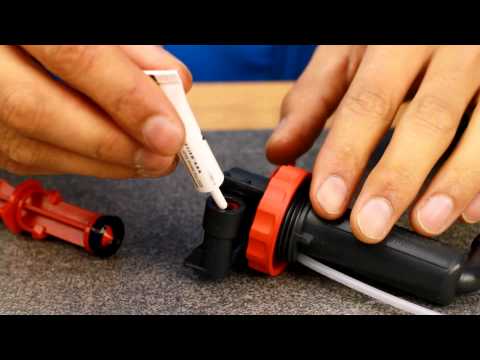
We recommend MSR Pump Cup Oil (which is the same as Mineral Oil ). A tube of Pump Cup Oil is included with every MSR stove. If you have an older model stove that did not come with Pump Cup Oil, you can purchase a tube of it at your local MSR dealer. You can also use saliva or any NON-petroleum based lubricant. It is important to lubricate the fuel line in order to protect the tube o-ring.

How do I avoid the black soot that deposits on the bottom of my stove after I prime it?

Avoid the black soot by priming with alcohol or a priming paste (available at most camping stores). NOTE: Alcohol will NOT generate enough heat to prime your stove if you are burning kerosene or jet fuel. For these fuels prime your stove as described in the instructions.

Can I burn alcohol in my MSR stove?

No, MSR stoves will not burn alcohol, and alcohol will damage MSR Fuel Bottles.

What happens if water or snow gets inside the Reactor® stove burner head?

Remove the fuel canister and simply shake out as much liquid/snow, etc. as possible. Re-mount the stove on canister and light, following the stove’s included directions. You will see some steam as the remaining liquid vaporizes. The burner may not glow completely red until all water is gone, but there should be no further complications. 

Always completely dry the Reactor stove before storing.

Understanding Prop 65

What is California Proposition 65?

Passed into law by California’s voters in 1986, Prop 65 is intended to help California residents make informed decisions about the products they buy.

The law states that companies selling products in California must display a warning when the product contains one or more of the approximately 800 chemicals known to the state of California to cause cancer and/or reproductive harm.

Why has MSR placed a Proposition 65 label on some of its products?

By placing the Prop 65 warning on a product, MSR acknowledges that it contains one or more of the chemicals on the Prop 65 list, however the listed chemical may be well within the “no significant risk” range. MSR has not evaluated every product but out of caution, we include the warning.

Are consumers who use an MSR product with a Proposition 65 label at risk?

The label simply indicates that the product contains the chemical and because of that, there is a potential for exposure to it.

The California government states: “The fact that a product bears a Proposition 65 warning does not mean by itself that the product is unsafe.” The government explains, “You could think of Proposition 65 more as a ‘right to know’ law than a pure product safety law.”

For example, some MSR stoves contain brass. Exposure to brass is not itself harmful. However lead is a component of brass and should the brass be disrupted, a user could potentially come in contact with the lead. While the lead levels fall below the “no significant risk” range, MSR is still required to acknowledge its presence.

To learn more about California’s Prop 65, please visit: https://oehha.ca.gov/proposition-65/general-info/proposition-65-plain-language

What types of chemicals are on the Proposition 65 list?

The Prop 65 list contains a wide range of naturally occurring and synthetic chemicals that are known to California to cause cancer or birth defects or other reproductive harm. They may be additives or ingredients in pesticides, common household products, food, drugs, dyes or solvents. They may be used in manufacturing and construction, or be the byproducts of chemical processes. Proposition 65 requires that the Governor of California maintain and publish a list of these harmful chemicals, and update it annually.

According to the state of California:

A chemical is listed if it has been classified as a reproductive toxicant or carcinogen by an "authoritative" organization on the subject. The U.S. Environmental Protection Agency, U.S. Food and Drug Administration, National Institute for Occupational Safety and Health, the National Toxicology Program, and the International Agency for Research on Cancer are considered authoritative for carcinogens. For reproductive toxicants, appropriate authorities include the U.S. Environmental Protection Agency, U.S. Food and Drug Administration, National Institute for Occupational Safety and Health, and International Agency for Research on Cancer. Chemicals will also be listed if they are required to be labeled or identified as a carcinogen or as a reproductive toxicant by an agency of the state or federal government.

Free Shipping on Orders over $50

We offer complimentary FedEx Ground shipping for orders over $50. Learn More

Orders Shipped in 1-2 Days

We do our best to get all orders out within one business day, Monday through Friday. Learn More

No Hassle Returns

We accept returns within 30 days of purchase. All returned items must be in new condition. Please be sure no dirt, grass or pet hair is on the item you are returning. Learn More

We Believe in What We Build

At MSR, we take pride in engineering the highest-quality outdoor gear available, and we stand behind everything we make. MSR gear is built to be exceptionally durable and easily repaired. And we back it up with the best service in the industry, all to keep your gear performing for you—and out of landfills. Visit our MSR warranty page for more info.

Portrait of our repair shop crew

Overall rating: 4.2 / 5 from 10 reviews.

AI Generated Review Summary

Summary topics

Review topics: ["performance","problem","stove","dragonfly","water","kit","fuel","canister","gas","flame"].

Review highlights

Reviews

Zuverlässig!

"Läuft seit 12 Jahren!"

C (5/5)

Happy 25th Anniversary to my Dragonfly

"So why the review after so long? Because I used it at Leeds Festival this weekend where the family used it for all our meals and they were surprised I’d had it so long, only to establish is 25 years tot eh month! So here is a very worthy review. I bought my Dragonfly in August ’99 while serving as a British Soldier. I was attracted to it because of its ability to burn almost anything and more so because I was an Army helicopter pilot and it would burn aviation fuel – free and available 24/7. On its first run out I enjoyed the simplicity of the operation and was delighted in the variable flame. Being able to simmer and I mean really simmer by having a very small flame meant I could cook really good meals. On simmer it’s not a noisy as some would make out and I’ve never woken anyone up on simmer. On full blast it sounds like a jet engine but it will boil enough water for a brew a mean to wash with in less than 3 minutes. I’ve gone head-to-head with so many burners over the years and its pretty much the fastest or equals the fastest, but nothing can simmer as low. I’ve used it in Canada in the deepest of winters, the Oman in the hottest of summers, in Belize in the wettest jungle I’ve experienced and on almost every continent on our planet. I’ve used it above 10,000 feet plus where normal gas canisters are useless and Trangia’s take forever and it’s been flawless. My Dragonfly has been abused ‘royally’ with 10 years of fully military service including war zones like Afghanistan and then through 15 years of camping and wild camping across our beautiful planet. I have cleaned it frequently and as a result my spare parts kit is still fully intact. Honest. I’d love to guess how many hours its been used but its impossible, but what I will say is has never ever failed to work and has always impressed everyone who’s seen it in action – it deserves a medal of honour. I am now convinced it will outlive me and will keep on burnin’ … Happy 25th birthday Dragonfly"

Ed M. (5/5)

Nice, but noisy performer

"Using regular white gas, this thing will cook a 1.7 liter pot of food allright. And there's plenty of energy for making proper food, not just the heat&eat stuff. This is a stove, not a coffee Maler-thing. Upside: Versatiity. Downside: Size and noise level. It really is noisy."

Martin F. (4/5)

Compared to a 20 year old Whisperlite International...... ( a review by an Engineer and Mountaineer)

"So I've very happily run a Whisperlite International for 20 years. In that time it's mainly been run on unleaded 95 octane petrol. I've rebuilt and serviced the pump and stove it a handful of times and it's been super reliable, super hot and generally a piece of bullet proof kit. I've just bought the Dragonfly as I've always wanted one, thought the simmer control option would be good and being able to run it on diesel means I can use the same fuel as the camper van. So this review is less about the individual performance of the dragonfly and more about a comparision with the Whisperlite and asking myself, now I've used both... which one would I buy again? And the simple answer: for back packing I'd take the Whisperlite because.... both stoves have approximately the same heat power output, the diameter of the pan supports is the same and I can use a 2.5L pan and cook for 4 on both stoves, the whisperlite pack size and weight is smaller plus it runs at an acceptable and sensible noise level. Reasons against the Dragonfly: If you are in a campsite it is so noisy you cannot make an early morning brew without waking people up - really. I can with the Whisperlight. The Dragonfly is heavier and bulkier for the same heat output (though it is a little more fuel efficient so on a multi-week trip there will be a small reward). While it is a true multi-fuel stove, and burns diesel cleanly, I've not found a light, weatherproof and reliable way to ignite diesel to prime and heat the stove. The simmer control is good but the Whisperlite can be controlled with a little experience. The nose disadvantage out weighs the simmer control for me. In conclusion, I'm glad to have both but I can see the Dragonfly staying in the camper van and being used for wilderness 'van life' cooking where it's convenient to only need one type of fuel for the van, heater and stove. Having tried both, the Whisperlite continues to be the best performance, to weight and size option for backpacking. Especially as it fits inside the Big Titan pot/kettle ON a build quality note..... I'm not a fan of the new pump or new pump to bottle seal. The old seal was an o ring which could be found all over the world in a hardware store. Now you have to get the MSR part to reseal this - that could be a big issue when in a remote location. Also, comparing the mold quality of the new pump with that of the 20 year old Whisperlite pump.... honestly, I thought I'd bought a cheap rip off at first. There's flashing from a poorly machined mold and the quality of the base plastic looks lower, cheaper and weaker. Plus the new pump shaft design has a narrow section in the middle which weakens it. ....all in all the pump quality is below the level that has been typical of MSR in the past. ...however, to be fair, let's see how long it lasts in the field. All I can say for now is it looks cheaper than the price tag and the quality I expect from MSR. And finally, 1, Why MSR have you change the windshield to this design with a massive gap in it??? You now have to fold it on the thinnest area and it's bound to fail earlier, not to mention be a poor windshield because of the massive gap. I'm currently using the one from my Whisperlite. 2, The factory installed jet was sooo tight I bent the supplied tool trying to unscrew it. Fortunately I had a large proper screwdriver in the van and had to use a lot of strength to loosen it. If I'd not had tools with me I would have been stuck. The stove should be supplied in a state that is field serviceable from the get go!"

Don (3/5)

Which Pot is it?

"In which pot does it fit when the stove is folded? Whats de name of the pot from MSR"

Simon (5/5)

25 Years and still going strong!

"What's there not to love with this stove! 25 years as my only stove and only had to rebuild it a few times lol. I think I've burn't every type of fuel in this bad boy. It's not quiet, but no matter the weather this thing cooks everything with ease. Spend the extra, buy the best. You wont be disapointed. However, please reduce the price of the maintenance kit.... I've paid for the stove 3 times now in parts"

Andy B. (5/5)

Cross threaded, full of production residue.

"Ive had major problems with two Dragonflys recently bought. They come with problems brand new out of the box. First one cross threaded the adjustment spindle the 2nd time testing it. I was sent a replacement stove, as I was afraid this stove would do the same I dissasembly the flamespreader, jet, shaker needle and the adjustment spindle. Started cleaning it with provided cleaning tool for the Dragonfly. You have no idea what amount of sized gunk of production residue there was left inside the stove. I lost counts of how many times I did this, and after the effort cleaning it. I gave up and sent it back. The spindle on the 2nd dragonfly did also start ti cross tread. When adusting it under load and fuel pressure you could feel the choppyness of the flameadjuster. It feelt like it would crossthread any moment. I would like to send MSR pictures of these two stoves and their problems. Im very pleased with my other msr liquid stoves and the two dragonfly does not feel like msr quality or workmanship. - Kristoffer"

Kristoffer (1/5)

Crap pump and wick

"The wick on mine disintegrated and could not be reattached (doesn't seem like a critical piece because it works fine, just shoots flaming gas onto the ground now and then). After maybe 200 uses, the pump's pump cup came detached and the bottle wouldn't hold pressure. You put it back on, and it pops off in 2-3 strokes even when lubricated. Had to glue it with JB weld in a pinch, but the pump rod won't go it all the way now. Someone told me they had this problem and had a friend that had this happen in the first week. This seems to be the Achilles heel."

Elliot (4/5)

Luxurious Stove

"This is a luxurious stove. Of course, because it can simmer SUPPPEERR FINE, it has to have more moving parts than the robust MSR XGK-EX. I compare it to that goldie popular stove., but this MSR Dragonfly is more stable and more controllable than those liquid stoves. The only downside is the pump. I have to create an adapter to connect from MSR XGK-EX to Lindal adapter, to be able to use a metal pump."

Iming M. (5/5)

Noise but never let me down!

"I own the Dragonfly about 20 years and it never caused any problem. The flame regulation works very well and the burner is powerful enough to heat up even pots for small groups. However there's one downside: Never try to boil water for a coffee early in the morning on a fully packed campsite if you don't want to be assassinated."

Oliver (5/5)

Q&A