Tente de randonnée ultralégère pour 2 personnes FreeLite™

Passer aux informations produits
1 de 22

MSR

Tente de randonnée ultralégère pour 2 personnes FreeLite™

Color: Green
Une tente autoportante ultralégère et incroyablement confortable pour les randonneuses et randonneurs qui partent à deux.
  • Légère : un poids minimal de 910 g (2 lbs).
  • Confortable : tapis de sol rectangulaire et 1 m (39 po) de hauteur intérieure ; deux grands vestibules de chaque côté pour le rangement de votre équipement ; pochettes intérieures et espaces de rangement suspendus.
  • Imperméable : double-toit et tapis de sol avec revêtement Durashield™ et coutures renforcées étanches pour la protection contre les intempéries.
  • Arceaux DAC NFL : arceaux en aluminium légers et très robustes pour une longue durée de vie même confrontés aux pires conditions.
  • Pochettes pratiques pour le matériel électronique : passages malins pour les cordons dans toutes les pochettes.
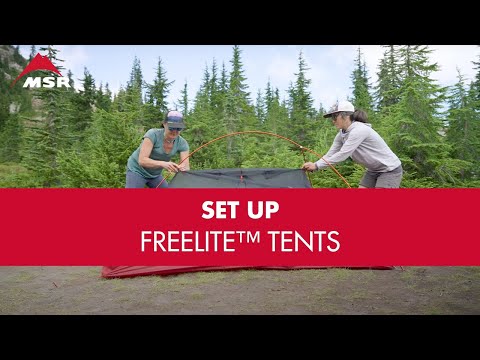
  • Montage et pliage faciles : avec son système unifié d’arceaux à emboîtement central et la symétrie du concept, elle se monte très rapidement. Son sac de transport est très compact.
  • Ventilation maximale : la toile intérieure en moustiquaire fine réduit les risques de condensation, tout en protégeant des insectes.
  • Détails bien pensés pour la robustesse : pièces de renfort, attaches des haubans surpiquées, œillets en métal anodisé pour les boucles d’attache des piquets.
  • Comprend : toile intérieure, double-toit, arceaux, piquets, haubans, sac de transport, instructions de montage.
Afficher tous les détails

Allégez votre sac sans sacrifier le volume intérieur avec la FreeLite 2 ultralégère et semi autoportante, conçue pour les personnes qui veulent profiter au maximum de leurs aventures en trois saisons sans être ralenties par leur équipement.

L’intérieur : Elle a perdu presque 226 grammes (8 oz) par rapport à la version précédente de la FreeLite. Le tapis de sol reste rectangulaire (pas de rétrécissement aux pieds comme pour la plupart des autres tentes) avec une hauteur intérieure de 1 mètre (39 po) (7,6 cm de gagnés). Le corps de tente en tissu moustiquaire fin assure une excellente ventilation. Le tapis de sol imperméable de type cuvette protège des éléments. Les deux portes ne sont pas courbes et vous permettent de sortir au milieu de la nuit sans devoir déranger l’autre personne. Les nouvelles fermetures à glissière sont plus robustes et s’utilisent facilement d’une seule main. De plus, elles se retrouvent au même endroit une fois fermées : vous savez toujours où placer la main pour ouvrir la porte, même dans l’obscurité. De nouvelles pochettes pratiques pour le matériel électronique sont dotées de passages dans les coins pour les cordons. Les espaces de rangement suspendus sont parfaits pour la frontale, les lunettes et autres objets que vous voulez garder à portée de main.

L’extérieur : La conception semi autoportante permet un montage rapide et facile. Des arceaux de tente DAC NFL super solides, un revêtement imperméable DuraShield™ et des coutures étanches protègent des intempéries. Le double-toit avec découpe permet d’économiser du poids. Il intègre deux grands vestibules pour ranger tout ce que vous ne voulez pas garder à l’intérieur. Les portes des vestibules permettent un passage facile, et sont dotées d’une gouttière StayDry™ qui empêche l’eau de s’égoutter sur vous et votre équipement.

En bref : Si vous et votre compagnon de randonnée (à deux pieds ou quatre pattes) souhaitez camper confortablement après avoir parcouru des kilomètres en portant un sac ultraléger, la FreeLite 2 semi-autoportante offre le volume et les fonctionnalités dont vous avez besoin avec un poids qui se fait oublier.

2 2
SKU 11515 14091
Color Green
Capacity 2 2
Minimum Weight (Standard) 2 lbs 2 lb
Minimum Weight (Metric) 0.91 kg 0.91 kg
Packaged Weight (Standard) 2 lbs 5 oz 2 lb 5 oz
Packaged Weight (Metric) 1.06 kg 1.06 kg
Floor Dimensions (Standard) in 84 x 50 in
Floor Dimensions (Metric) cm 213 x 127 cm
Floor Area (Standard) 29 sq. ft 29 sq. ft
Floor Area (Metric) 2.7 sq. m 2.7 sq. m
Vestibule Area (Standard) 15 sq. ft 15 sq. ft
Vestibule Area (Metric) 1.4 sq. m 1.4 sq. m
Number of Poles (2) DAC NFL 8.7mm (2) DAC NFL 8.7mm
Interior Peak Height (Standard) 39 in 39 in
Interior Peak Height (Metric) 100 cm 100 cm
Packed Size (Standard) 18 x 4.5 in 18 x 4.5 in
Packed Size (Metric) 46 x 11 cm 46 x 11 cm
Number of Doors 2 2
Freestanding Semi-freestanding Semi-freestanding
Rainfly Fabric 15D ripstop nylon 1200mm Durashield™ polyurethane & silicone 15D ripstop nylon 1200mm Durashield™ polyurethane & silicone
Mesh Type 10D polyester micro-mesh 10D polyester micro-mesh
Floor Fabric 15D ripstop nylon 1200mm Durashield™ polyurethane & DWR 15D ripstop nylon 1200mm Durashield™ polyurethane & DWR
Country of Origin Made in China Made in China

Contenu réductible

What is solution-dyed fabric?

Solution-dyed fabric uses pre-dyed fibers to minimize the water and energy required to color the fabric. This means that color, or pigment, is added to the material producing the completed fabric. Compared to conventional batch-dyeing—the process of dyeing already produced fabric— solution dyeing requires significantly less water and energy, reducing waste and carbon emissions.

Why do actual weights sometimes differ from published weights?

Although we try to be as accurate as possible with our published weights, MSR, like all manufacturers, must make educated guesses as to what the final weights of our tents will be. Because of this, you may notice your tent weighing a few ounces above or below its advertised specs. Such discrepancies are common among tents due to the nature of the product. During the manufacturing process, variations in coatings and fabrics can lead to modest weight differences. In lightweight tents, this equates to a mere ounce or two. In larger tents, it can be a bit more.

Here are a few reasons for those weight variances:

  • Coating variances: The thickness in coatings on tent fabric can vary a bit from one tent to another. Fabrics are produced in batches and called “lots,” and there can be a slight weight difference between lots as well as within lots.
  • Fabric variances: Because tent fabric is hand cut in up to 200 layers at once, some pieces may be cut just outside the line, making certain parts slightly larger and thus heavier.
  • Scale accuracy: At MSR, weights are determined using our calibrated lab scales, which are more accurate than normal household scales.
  • Added products: Brands may decide at the last minute to include more stakes or guy cords, which will add to the packaged weight.
To learn more about how we define tent weights, please visit our blog post on this topic!

What are packaged and minimum weights?

At MSR, we voluntarily follow ASTM International F 1934-98 standards around these two tent industry terms. In accordance with this standard, packaged weight includes the total weight of the packaged contents off the shelf. Minimum weight, by comparison, refers to the combined weight of the tent body, rainfly (if applicable) and tent poles, but not any of the other items that may appear in the package, such as tent stakes, guy cords, stuff sack, etc.

Many MSR backpacking tents can be pitched using only the rainfly, poles and footprint, and in our tent specs we call this non-industry standard setup option our Fast & Light weight.

To learn more about packaged weight vs. minimum, and the manufacturing processes that can affect them, check out our blog post on the topic.

What defines "waterproof" in a tent and what does the "mm" rating mean?

For an MSR tent, waterproof means that all external fabric has been coated with our exceptional polyurethane coatings and the seams are watertight out of the bag. "mm" refers to millimeters and is paired with a number to represent a standardized measurement of how waterproof a coating is. For instance, a 1500mm coating will withstand a 1500mm (5') column of water for more than one minute before a single drop might appear through the fabric. That's strong enough to prevent rain from leaking into a tent in a hurricane-force storm.

Why should I get a footprint?

We recommend that you use an MSR footprint (sold separately) underneath your tent. Customized to fit each specific model, it will not only keep your tent floor clean and dry, but it will also protect it from excessive abrasion, prolonging the life of the tent. In addition, some of our tents can be set up with just the footprint and fly, creating an incredibly light, minimalist alternative to a full tent.

How do I prevent mildew?

One of the easiest ways to damage your tent is by not drying it as quickly as possible after it gets wet. Storing a wet tent for as little as 24 hours in warm weather is likely to start the process of mildew formation. Mildew can permanently damage the waterproof coatings by causing them to separate from the fabric, but mild to severe staining is more common. Mildew stains are permanent. They cannot be removed without potential harm to the fabric coatings and are not covered by warranty. Even when your tent appears to be dry after use, it is always best to assure it is completely dry before storing. Hang it outside or pile it loosely in your house for a few days, turning it inside and out to assure it has dried everywhere. Never machine dry your tent as the heat can melt the fabric.

How do I repair tears?

You can do minor repairs in the field using one of several alternatives. We offer waterproof, self-adhesive patches (sold separately) for all of the fabrics and mesh on your tent. Seam sealants are also a good alternative for small holes, or use duct tape for minor, temporary field repairs. If you use duct tape, be sure to remove it as soon as you are through with your trip. The adhesive will eventually eat away at the fabric and you will end up needing a larger patch. We recommend carrying at least one of these as a precaution. If you have a large tear, our Product Service Center can also fix your tent after you return from your trip.

How do I seam seal my tent?

If you start to notice leaks along your seams, seam sealing can make them waterproof again, extending the life of your tent. The process can be easier than you might think. We put together this video to help guide you through.

What's the best way to clean my tent?

Cleaning your tent is not necessary unless it has an offensive odor or becomes heavily soiled. If heavily soiled, the pressure from a regular garden hose will remove most loose dirt. For more severe cleaning, set up your tent and hand wash it with warm water, a sponge and mild, non-detergent soap. Do not use dishwashing liquid, detergent, bleach, pre-soaking solutions, or spot removers. Rinse well. Dry your tent by pitching it or line-drying it. Never dry clean, machine- wash or machine-dry your tent. Any of these methods can remove all the waterproof coatings from the tent.

Are the shorter Hubba Hubba Bikepacking tent poles compatible with other Hubba Hubba series tents?

The shorter tent poles for our new Hubba Hubba 1 and Hubba Hubba 2 bikepacking tents will not work for previous generation Hubba Hubba tent series (non-bikepacking models). This is due to the specific geometry and design configuration. These pole sets are made out of different materials and the arc and curvature of the tent is actually different because of it. The tent body is then designed differently to fit snugly within that curvature, and thus, the two different tent poles are not interchangeable in between these models. Another question we get asked is whether or not the front mount bikepacking bag/stuff sack can be purchased separately to be used with a different (non-packing) Hubba Hubba series tent. The short answer is no, because the bikepacking tent poles are shorter - one of the main draws of this design for packability purposes, and it's ability to fit well between handlebars. The longer pole sets on other models will not fit into the Hubba Hubba bikepacking tent front mount stuff sack. Do you need tent poles for your non MSR tent, such as Walrus or Moss?For any tent poles that we do not make/no longer make (Moss, Walrus, etc.), please check with Tent Pole Technologies for information.

What happens if one of my poles breaks?

If a tent pole breaks, you can make a temporary splint with the pole repair sleeve. Slide the repair sleeve over the broken section and tape or wedge in place with a stick to hold it secure.

Understanding Prop 65

What is California Proposition 65?

Passed into law by California’s voters in 1986, Prop 65 is intended to help California residents make informed decisions about the products they buy.

The law states that companies selling products in California must display a warning when the product contains one or more of the approximately 800 chemicals known to the state of California to cause cancer and/or reproductive harm.

Why has MSR placed a Proposition 65 label on some of its products?

By placing the Prop 65 warning on a product, MSR acknowledges that it contains one or more of the chemicals on the Prop 65 list, however the listed chemical may be well within the “no significant risk” range. MSR has not evaluated every product but out of caution, we include the warning.

Are consumers who use an MSR product with a Proposition 65 label at risk?

The label simply indicates that the product contains the chemical and because of that, there is a potential for exposure to it.

The California government states: “The fact that a product bears a Proposition 65 warning does not mean by itself that the product is unsafe.” The government explains, “You could think of Proposition 65 more as a ‘right to know’ law than a pure product safety law.”

For example, some MSR stoves contain brass. Exposure to brass is not itself harmful. However lead is a component of brass and should the brass be disrupted, a user could potentially come in contact with the lead. While the lead levels fall below the “no significant risk” range, MSR is still required to acknowledge its presence.

To learn more about California’s Prop 65, please visit: https://oehha.ca.gov/proposition-65/general-info/proposition-65-plain-language

What types of chemicals are on the Proposition 65 list?

The Prop 65 list contains a wide range of naturally occurring and synthetic chemicals that are known to California to cause cancer or birth defects or other reproductive harm. They may be additives or ingredients in pesticides, common household products, food, drugs, dyes or solvents. They may be used in manufacturing and construction, or be the byproducts of chemical processes. Proposition 65 requires that the Governor of California maintain and publish a list of these harmful chemicals, and update it annually.

According to the state of California:

A chemical is listed if it has been classified as a reproductive toxicant or carcinogen by an "authoritative" organization on the subject. The U.S. Environmental Protection Agency, U.S. Food and Drug Administration, National Institute for Occupational Safety and Health, the National Toxicology Program, and the International Agency for Research on Cancer are considered authoritative for carcinogens. For reproductive toxicants, appropriate authorities include the U.S. Environmental Protection Agency, U.S. Food and Drug Administration, National Institute for Occupational Safety and Health, and International Agency for Research on Cancer. Chemicals will also be listed if they are required to be labeled or identified as a carcinogen or as a reproductive toxicant by an agency of the state or federal government.

What do the letters D and T after the fabrics mean?

"D" stands for Denier. It's a numbering system for fibers, filaments and yarns, in which the lower numbers are lighter/finer and the higher numbers heavier/coarser. "T" stands for Thread Count – specifically the number of warp and fill threads in a square inch. The lower numbers represent a loosely woven fabric and the higher number a tightly woven fabric. These two numbers together help indicate the strength and feel of a piece of fabric.

What are some different configuration of the tarps and wings?

The 7-point design has a "flat" and a "pointed" end. For all configurations, the "pointed end" should always be used as the highest supported point. The opposite "flat edge," which consists of three points, can be stretched tightly and attached to a shelter, car rack, or even the pole-supported vestibule of a tent to form a protected area. Try placing the poles at different points, using no poles at all or adding more poles to create new living spaces. (Paddles and sticks work well in the cord storage pockets, too.) Experiment and be creative!

How should I store my tent?

Never pack or store your tent if it is wet, damp or dirty. Although we use the best polyurethane waterproofing available, prolonged exposure to moisture causes hydrolysis which, in turn, causes the waterproof layer to break down, becoming soft, sticky and no longer waterproof. Storing a wet tent for as little as 24 hours in warm weather is also likely to start the process of mildew forming on the fabric. Mildew will cause your tent to stain, smell and will also lead to the premature breakdown of the waterproof coating. Mildew and moisture damage are not covered under the Limited Warranty.

For long-term storage, keep your tent in a dry and cool area, out of direct sunlight. Store it outside of its stuff sack, as you would a sleeping bag, in a breathable, over-sized cotton or mesh duffel for protection. On the cheap, an old pillowcase is ideal.

How do I guy out my tent with the included tensioners?

Guying out your tent will provide more stability in windy or extreme conditions while also maximizing ventilation. To guy out your tent, run cord from the tent's guy point through the tensioner. Pass the cord around the stake and back through the tensioner, keeping the curved side of the tensioner toward the stake. Tie a knot at the end of the cord. To tighten cord, pull the tensioner up along the cord and release.

What causes condensation and how do I reduce it in my tent?

Condensation is the build-up of moisture inside your tent due to differences between the inside and outside temperatures. There are three main sources:
  • Weather Conditions: High humidity, low temperatures, and rainy conditions create the most condensation.
  • People: We produce about 1 - 2 pints of moisture per night through breathing and skin evaporation.
  • Wet Environment: Wet ground or wet gear stored inside the tent.
While no tent design can eliminate condensation, the key to reducing it is ventilation. Cooler, drier air has to flow into your tent and warm, moist air must escape. We have designed a variety of ways to do this.

To start, the tent body and ceiling are made of breathable and mesh fabrics. This allows moisture to escape the interior of your tent. However, it must also be able to escape the waterproof fly, and every MSR rainfly has a peak vent that provides protection from the outside, while still allowing essential, free-flowing fresh air to move through your tent. You can also leave a door open in good weather, or take advantage of the double sliders on the doors to vent from the top where warm and moist air tends to accumulate. Make sure to leave at least two vents open if possible, allowing any breeze to provide cross-flow ventilation for maximum circulation. Guying out your rainfly will also increase ventilation in hot or humid conditions.

Video: What causes condensation in a tent

How long will a tent last?

A tent's lifespan is directly connected to the amount you use it. A tent's biggest enemy is UV radiation (just like your skin). A tent that lives in extreme conditions at high altitude, such as Everest Base Camp, may only last a few months, while a well taken care of tent, used occasionally under normal conditions, can last for many years.

Does MSR sell tent pole sets by themselves?

Yes, we do sell tent pole sets by themselves – just contact us here if you need a replacement. Please note, our pole sets are only compatible with the specific tent model they are designed to fit.
Free Shipping on Orders over $50

We offer complimentary FedEx Ground shipping for orders over $50. Learn More

Orders Shipped in 1-2 Days

We do our best to get all orders out within one business day, Monday through Friday. Learn More

No Hassle Returns

We accept returns within 30 days of purchase. All returned items must be in new condition. Please be sure no dirt, grass or pet hair is on the item you are returning. Learn More

We Believe in What We Build

At MSR, we take pride in engineering the highest-quality outdoor gear available, and we stand behind everything we make. MSR gear is built to be exceptionally durable and easily repaired. And we back it up with the best service in the industry, all to keep your gear performing for you—and out of landfills. Visit our MSR warranty page for more info.

Portrait of our repair shop crew

Overall rating: 4.1538463 / 5 from 26 reviews.

AI Generated Review Summary

The FreeLite™ 2-Person Ultralight Backpacking Tent is highly regarded for its ability to withstand strong winds and rain, and its lightweight design makes it ideal for travel.

Summary topics

  • Wind Resistance: 17%
  • Weight: 30%

Review topics: ["size","weight","weather","problem","quality","fabric","design","pockets","conditions","setup","packs","set","tent","wind","pad","system","walls","floor","solo","point","upgrade","freelite 1","coast","shelter","fly"].

Review highlights

  • "The fly covers the tent incredibly well and it stands up to heavy rain and wind."Jacob O.
  • "Love the weight reduction and rectangular floor plan."Section H.
  • "The only condition I still have to try is with strong winds."Andres L.

Reviews

Lightweight tent but a pole broke

"I bought this tent new. On the second day of the hike, one of the poles broke. The weather conditions were ideal, but the pole just snapped in two while setting up the tent. I managed to put some duct tape around it so I could use the tent for the rest of my hikes. Unfortunately, the tent was no longer properly wind or rain resistant because it had lost its aerodynamic shape. This was not the best situation to be in when hiking in Northern Sweden. I appreciate that MSR offers lightweight tents for hikers, but it seems they come with a certain cost. I have lost trust in MSR poles, as I had a similar situation with the pole on the rented Hubba Hubba Bikepack 1-person tent I previously used."

Kelly (2/5)

Poles broke

"Main poles stopped working (bits disappeared inside so couldn’t lock them)) after about three easy camps in New Forest. MSR didn’t replace. Just glad I wasn’t anywhere too remote."

J H. (1/5)

Excellent lightweight tent

"So far, I have used this tent in at least 10 opportunities ranging from elevations of 300m (984ft) | 32C (90F) and up to 3600 m (11800ft) | 0C (32F). I tried the tent in very rainy conditions as well as perfect weather and no disappointments yet. The only condition I still have to try is with strong winds. It's a perfect tent for 2 people (we use a double sleeping pad BG Rapide SL) and even when I hike alone I take it with me as the space is well appreciated. The only downside would be the tent stakes, I think the ones that come with this tent are useless unless you are in perfect soil. I replaced them with the Mini-Groundhog Stakes and they work way better. Another improvement would be making the tent poles shorter when folded. They are a bit on the large side, and some of my smaller packs do not fit those inside."

Andres L. (5/5)

Impressed

"This is my first "good" tent, having previously used a cheap Amazon one-person tent, so my reference point is pretty low. That said, the tent packs up quickly, and it is light. With my single use, it set up quickly and easily. Please make sure you keep track of the poles because one is mingled in with the others in the sleeve, but it is not attached so that it will fall out. After set up, the interior is roomy enough for a pad and gear for one person. I would not want to share the tent with anyone unless I was very familiar with them, but it is large enough to pack up the sleep system while staying dry inside the tent if necessary. I would not want to set it up in the rain because you must set up the tent before the fly, and the tent body is about 70% mesh. The pockets inside are unique and placed in the right spots. You can place your phone in one of the top pockets and lay there watching videos just like you were at home. It's excellent, and I enjoyed it on the FIRST and so far only outing."

Randy P. (4/5)

Excellent 2 person backpacking tent.

"MSR provides another exceptional product with this tent. We bought it intending to start backpacking this year and we just got back from our first trip. Had a heavy downpour and we stayed completely dry as well as our gear in the tent and in the vestibules. It’s big enough for two people as long as you are comfortable getting close, would be plenty big for one and all of your gear. It does how ever fit two 25” wide sleeping pads which is great. Sets up and packs down very easy, incredibly light, and very well made. Highly recommend."

Lee R. (5/5)

Big upgrade from my old tents

"The Freelite 2 is pretty fantastic. I've had it out in some pretty nasty weather so far and it's kept me dry the whole time. It pitches tight with no sag and no wrinkles, the door zippers don't snag and the rainfly doesn't drip water directly into the tent when you open it in the rain. The weight is right for two people and there is enough room in the tent for two adults. The square floor makes it easy to pitch and gives a bit of extra room inside. The fly covers the tent incredibly well and it stands up to heavy rain and wind. Overall a great light tent to take into the backcountry."

Jacob O. (5/5)

So far so good

"Have taken this tent out a few times now. So far so good. Has stood upto fair strong wind, but you have to position the tent correctly. Kept me dry in the rain. Easy and quick to set up. Lots of room inside. Feels flimsy but does the job."

V24 H. (4/5)

Love this tent

"Got this tent to upgrade from my r.e.i half dome 2. So far have had it out 6 time including a 6 day trip. This tent is seriously awesome. Myself and 2 dogs fit with plenty of room. Great construction and quality. It being so light weight for the size is the best feature. Look forward to years of use."

Randy (5/5)

Awesome Upgrade over Previous Model

"Love the weight reduction and rectangular floor plan. I measured the inner tent dimensions and both ends are 50" across, so suitable wide 25" sleeping pads. But honestly, this tent is so lightweight I plan to use it as a solo shelter. The updated mesh inner is a joy to use with gear lofts and lots of pockets. They should just sell the inner tent by itself! The door zippers are bi-directional so they can be vented and the new color scheme is calming and blends into the forest quite well for privacy. I wish the cross-pole was connected to the lengthwise one to prevent loss, but I guess you just need to be careful not to lose it."

Section H. (5/5)

2x25 ≠ 50

"Didn't take the tent outdoors, so no word on it's prowess there. It doesn't fit two regular wide sleeping pads, a bit of a bummer since the tent is really nice, roomy and light. Oh and the crossbar.. yeah my Kelty TN 3, and plenty others, have that plastic swivel that makes sure you don't lose it.."

Lionel (4/5)

Q&A